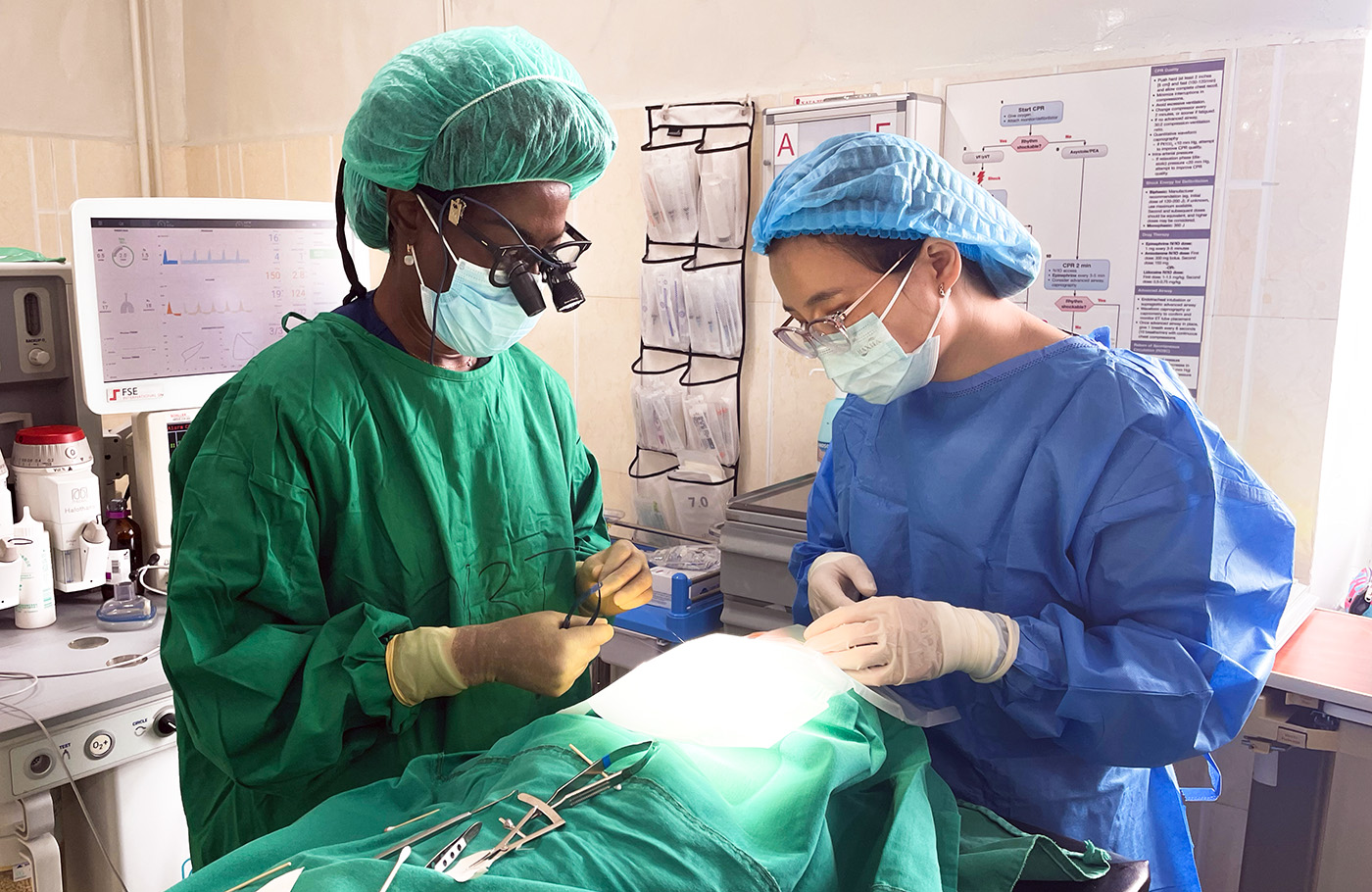
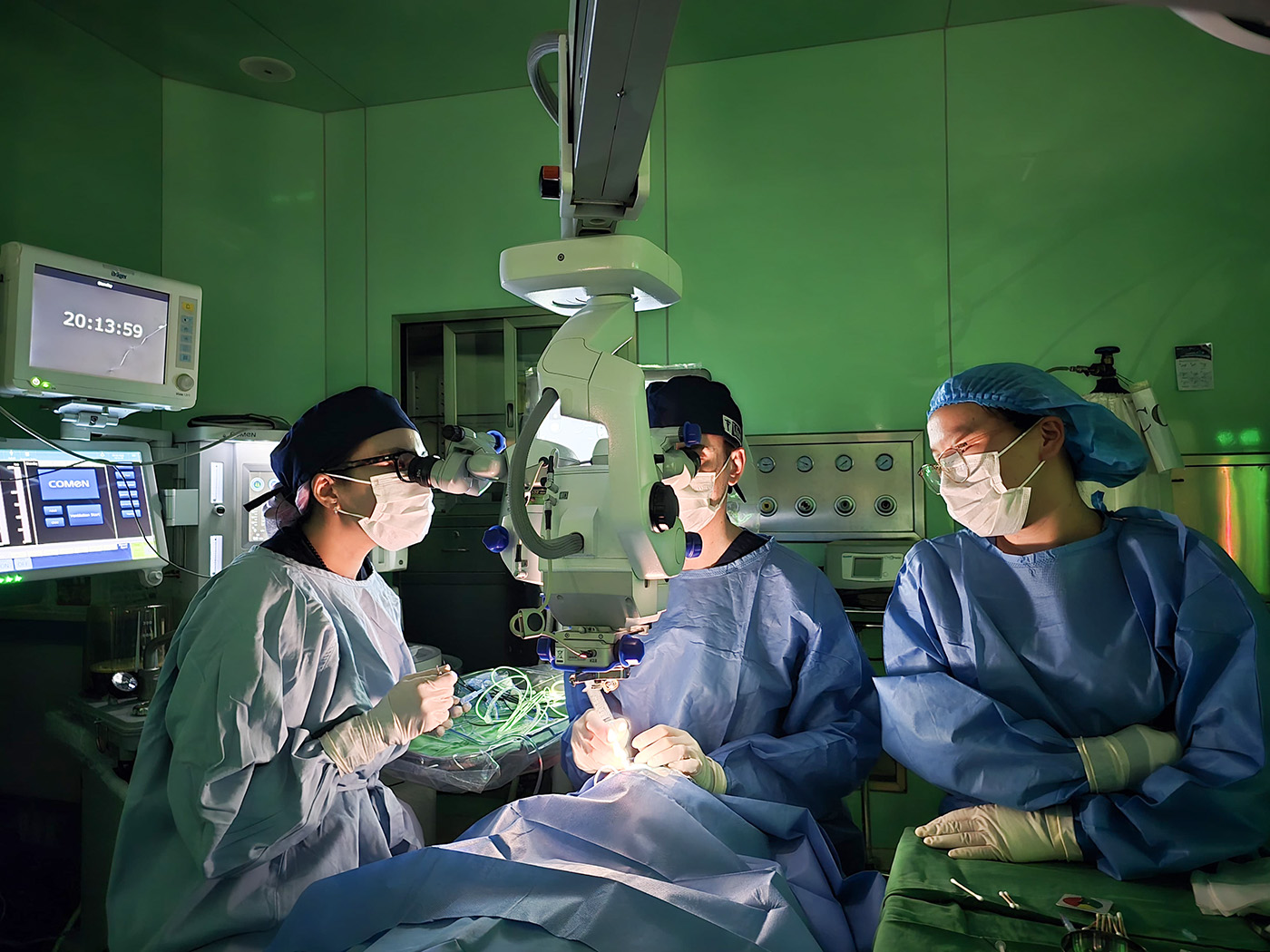
In May and June 2024, the Virtue Foundation assembled an interdisciplinary team for its 14th annual Surgical and Teaching Mission to Mongolia. A dedicated group of 46 volunteer surgeons, physicians, fellows, residents, and students returned to the Land of the Eternal Blue Sky for nearly three weeks of patient care and medical education.
This year’s mission expanded subspecialty services to deliver advanced surgical and medical care across multiple disciplines, including ophthalmology (cornea, glaucoma, cataract, retina, oculoplastics, and strabismus), otorhinolaryngology, head and neck surgery, anesthesiology and intensive care, hepatobiliary surgery, neurology, and neurosurgery. The team worked at six hospital sites in Ulaanbaatar and Khovd provinces from late May to mid-June. For the first time, the Foundation also deployed a team to Erdenet, Mongolia’s second-largest city, located north of the capital.
Together with local healthcare professionals, the Virtue Foundation team cared for more than 750 patients and performed nearly 250 advanced surgical procedures. In addition to clinical work, the teaching and training of Mongolian physicians remained a top priority, reflecting the Foundation’s ongoing commitment to sustainable skills development and long-term capacity building.
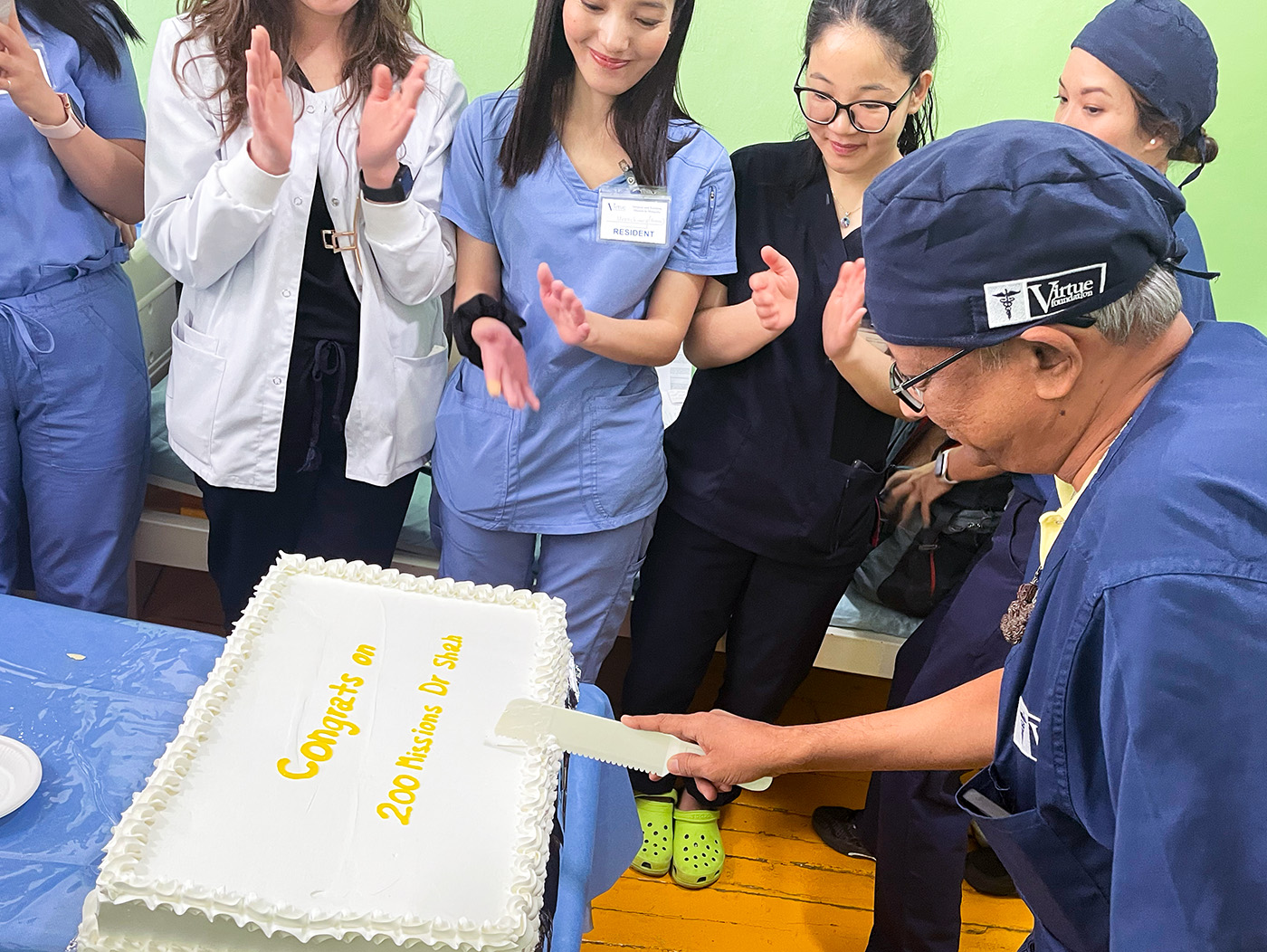
This year’s mission also celebrated several milestones. The National Cancer Center completed its 400th successful free flap, 13 years after the first, and longtime Virtue Foundation volunteer Dr. Janak Shah marked his 200th surgical mission.
The Foundation’s data team met with hospital leaders, government officials, and data scientists to share insights from the Actionable Data Initiative. Their geospatial analytics project continues to identify healthcare trends and highlight areas of unmet need across Mongolia. Several of these findings have already informed on-the-ground interventions, and the Virtue Foundation looks forward to deepening its collaboration with the Mongolian Ministry of Health and other partners to translate these insights into measurable impact during the 2025 mission and beyond.